
Spatial Dignity for Affordable Housing: 2026 Erwin-Ramsey Fellowship
The built environment reflects what we value. In affordable housing, where budgets are constrained and design decisions are often driven by cost first, architecture has the opportunity to redefine what constitutes value—shifting it away from purely financial metrics toward the lived experience of health, comfort, and dignity.
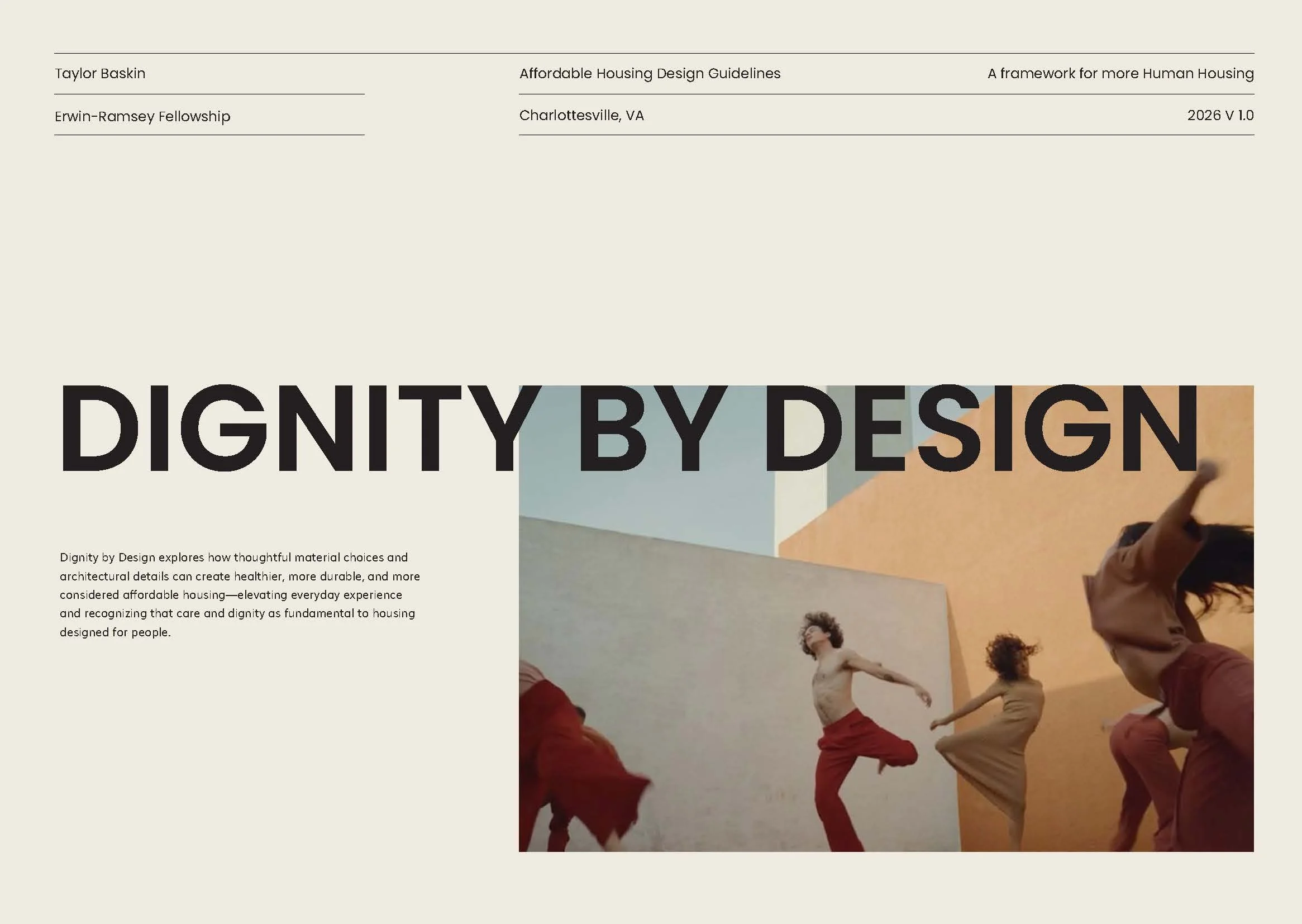
This summer, our 2026 Erwin-Ramsey Fellow, Taylor Baskin (UVA M.Arch. '28), conducted an independent research project exploring how material selection and architectural detailing can improve the long-term quality of affordable housing in Charlottesville—not through luxury finishes or increased square footage, but through healthier materials, thoughtful detailing, and spaces that affirm the dignity of everyday life.
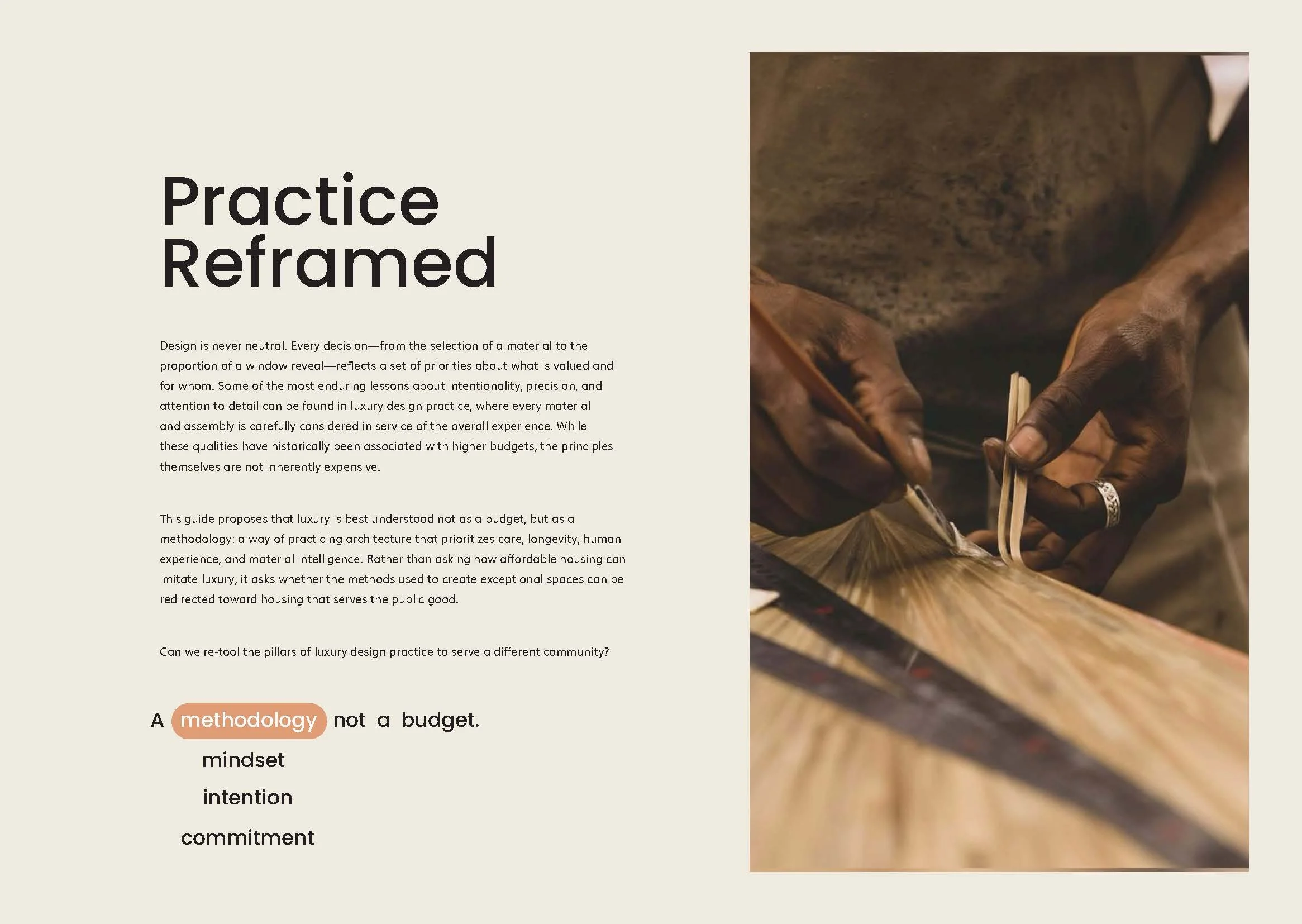
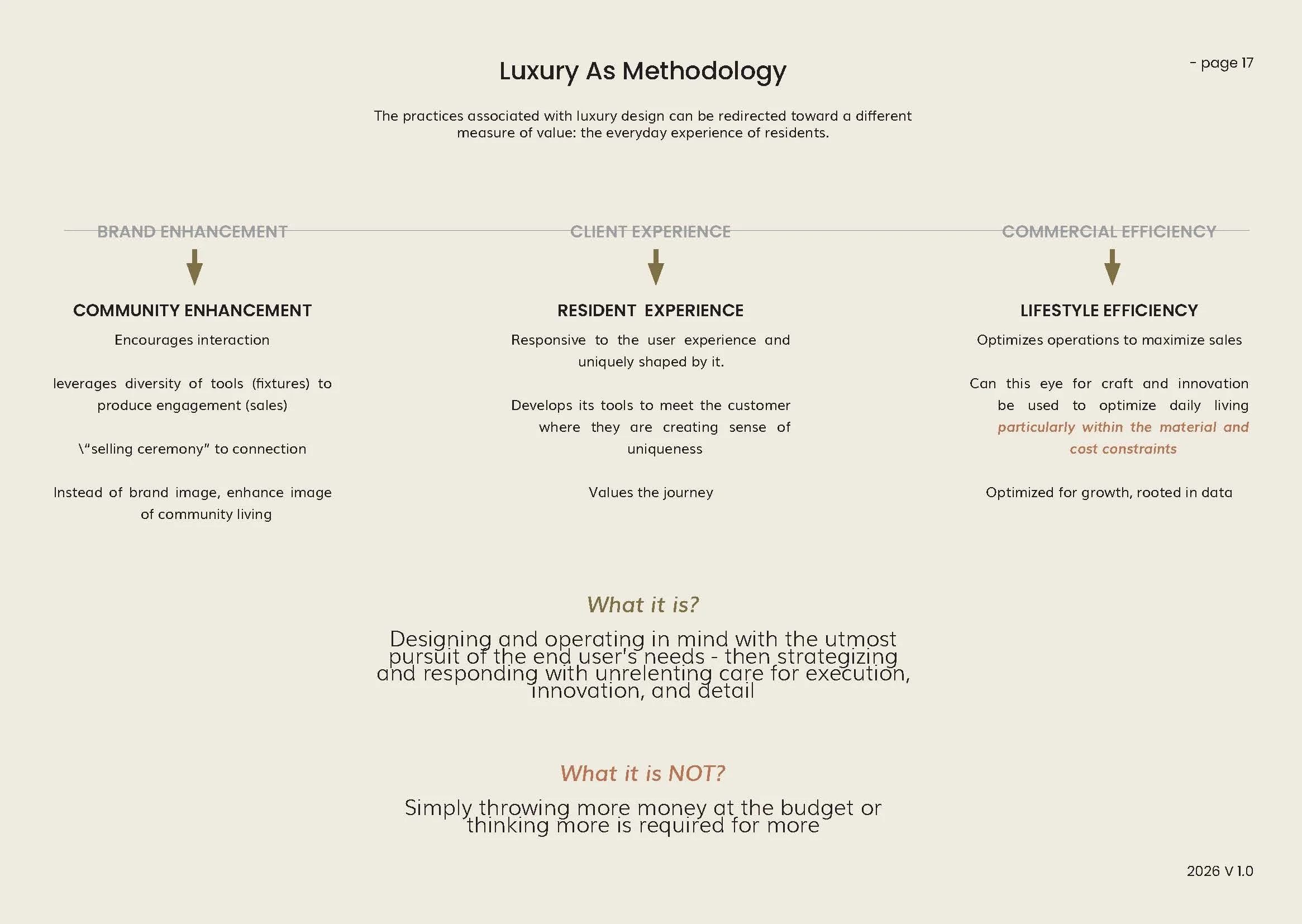
A double Hoo, Taylor returned to the University of Virginia after more than a decade in architectural practice and retail design for luxury brands including Louis Vuitton and Tiffany & Co. There, she developed an appreciation for the rigor, craftsmanship, and attention to detail required to create exceptional environments. Those experiences reframed luxury not as a measure of cost, but as a methodology rooted in intentionality, performance, and quality execution—one that should not be reserved for a privileged few.
Rather than viewing luxury and affordability as opposing practices, the fellowship asked a different question:
What if the methodologies of luxury design—careful material selection, craftsmanship, performance optimization, and an intentional user journey—were redirected toward housing that serves the greatest public need?
Working alongside BRW Architects, local housing organizations, and industry partners, Taylor explored this question in three stages.
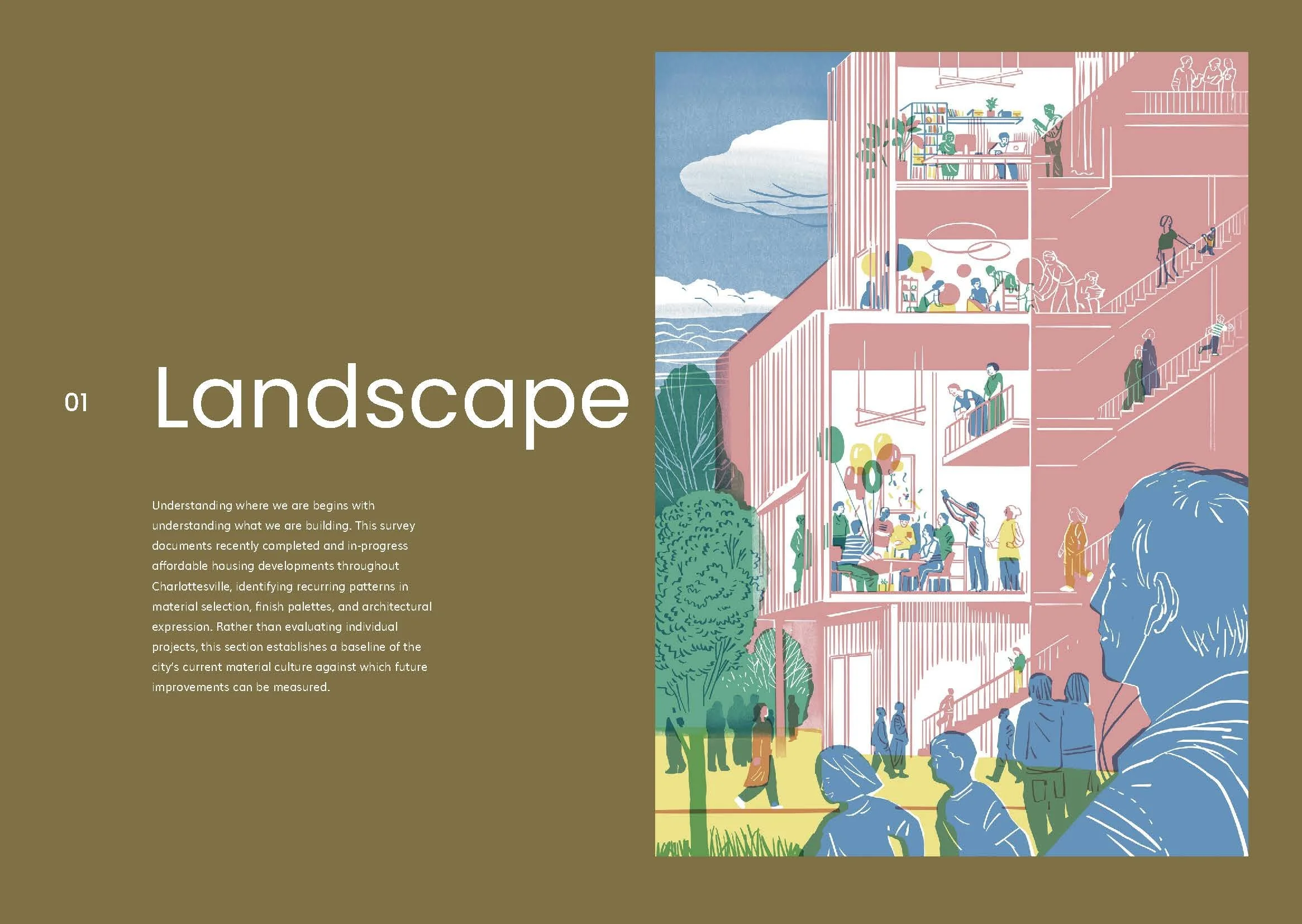
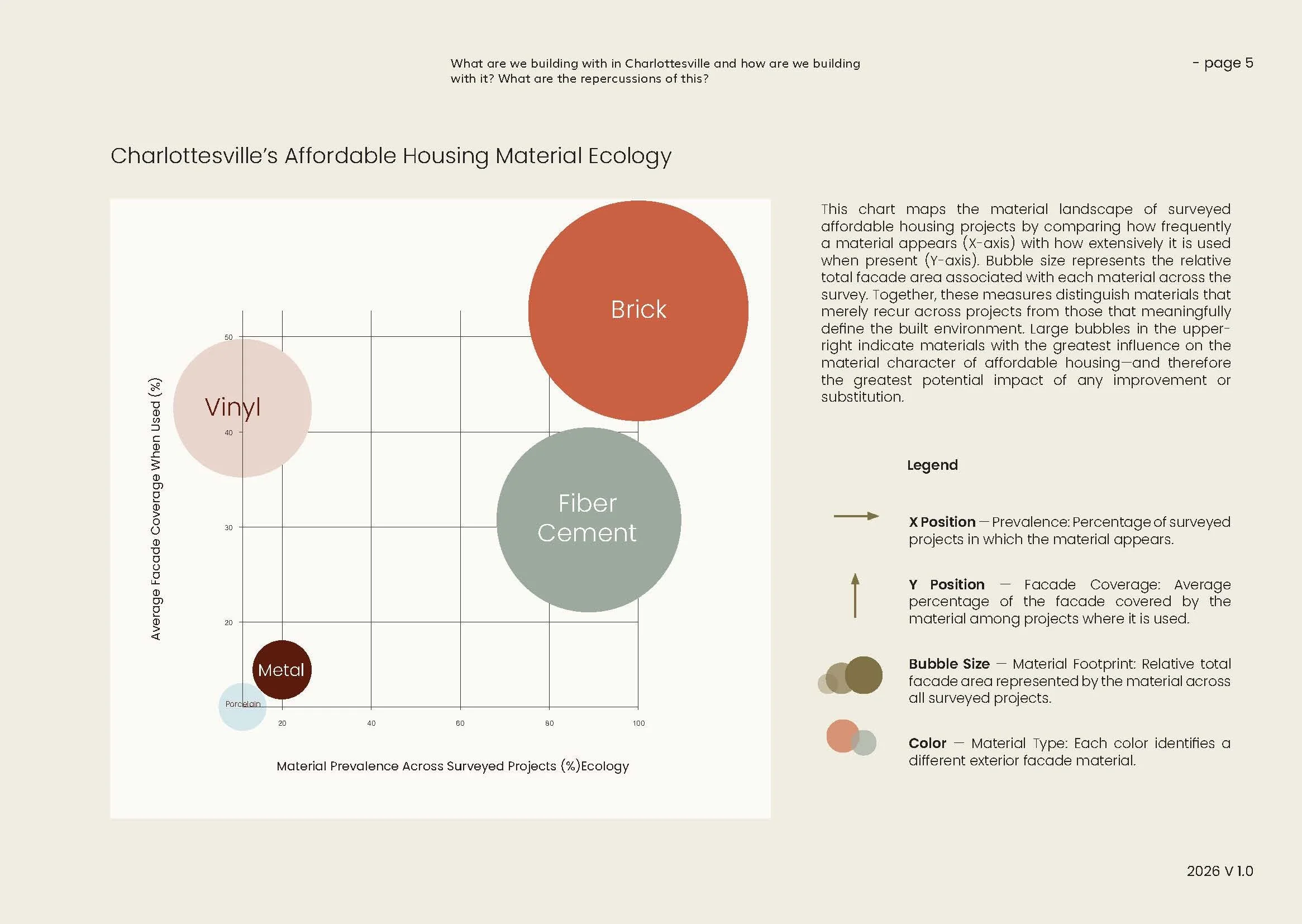
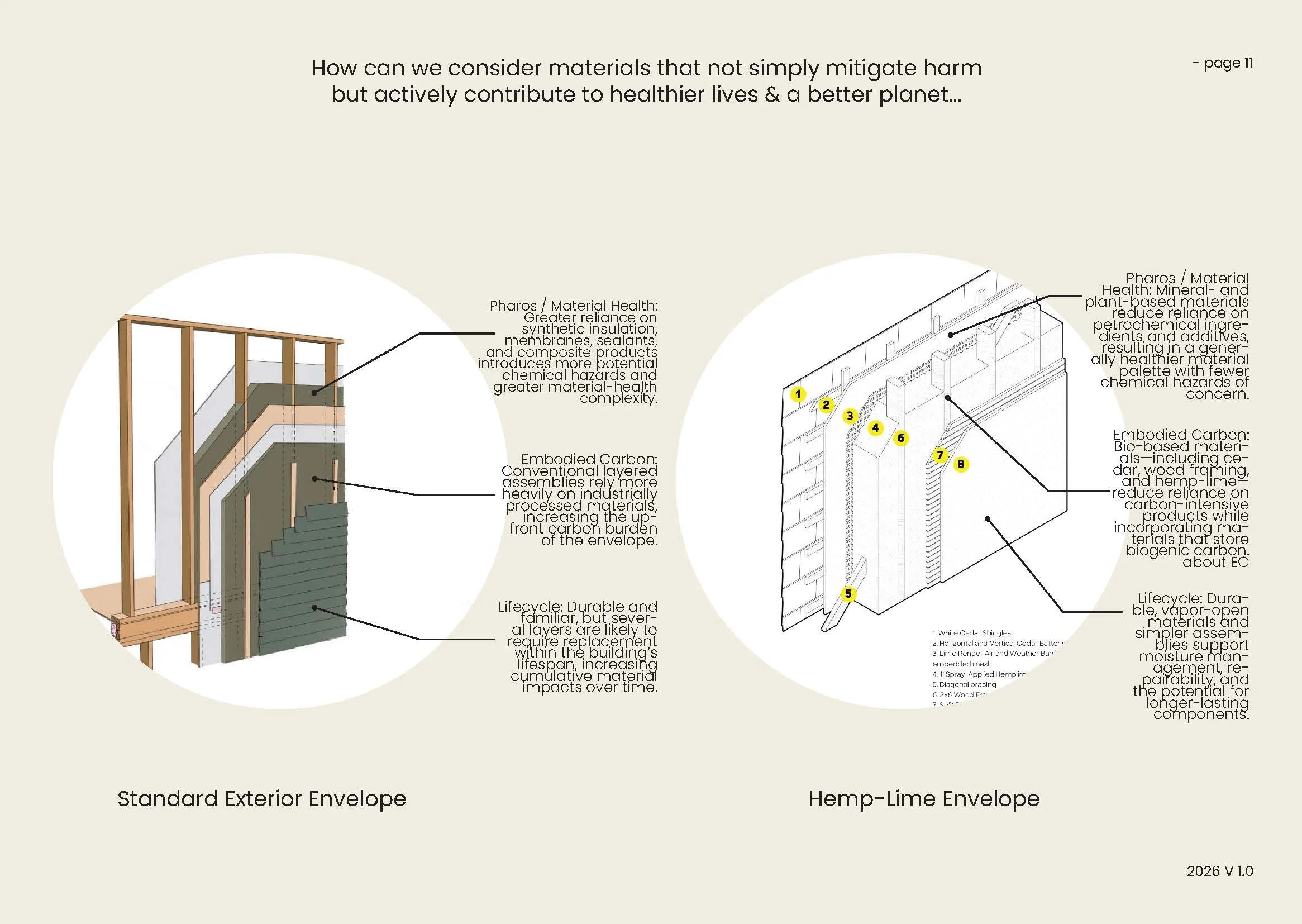
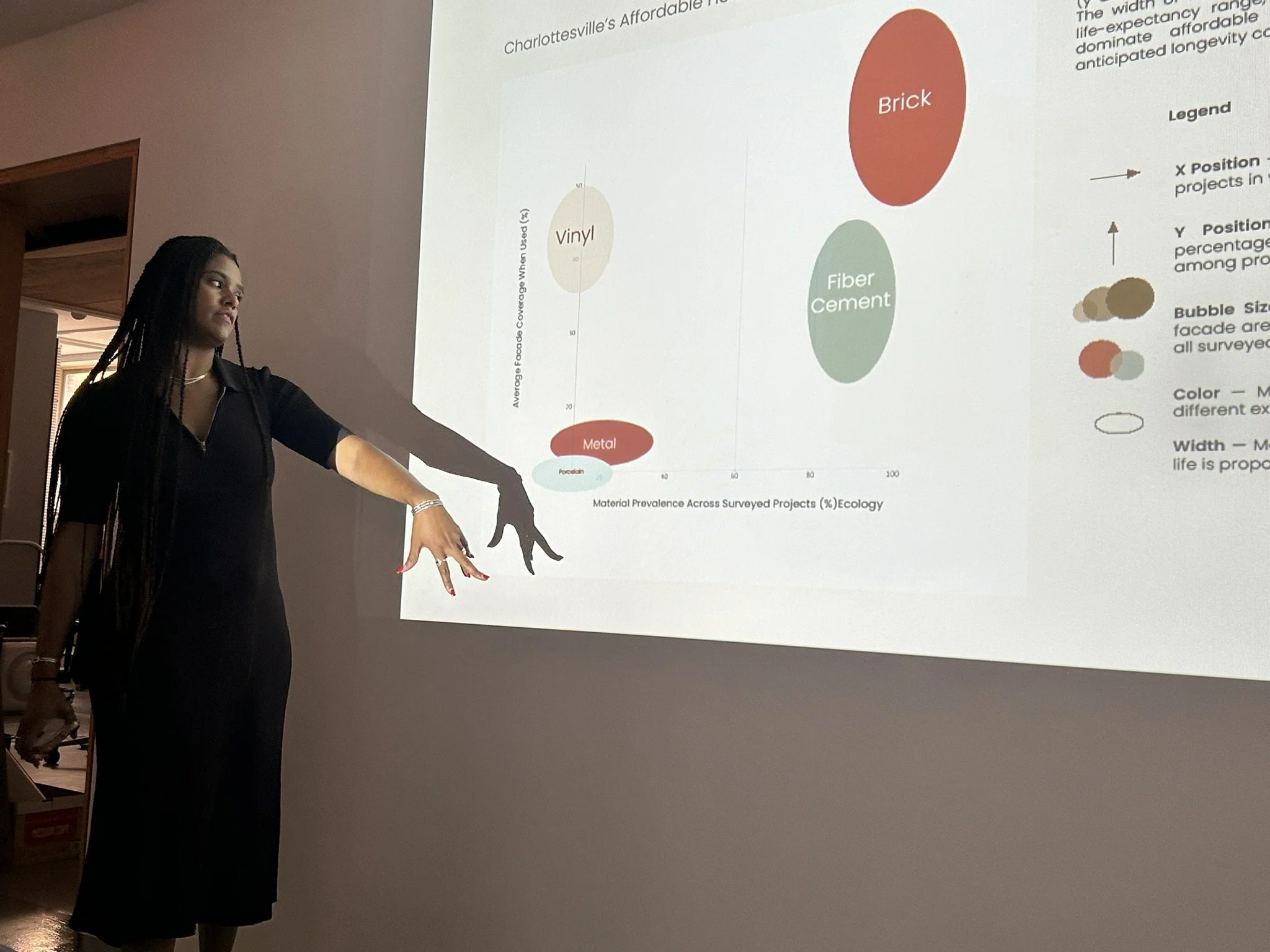
The first documented Charlottesville's existing affordable housing landscape through field surveys and construction documents, focusing on exterior envelope assemblies. Envelope materials represent some of the largest quantities of material in a project and are often shaped by funding mechanisms, policy requirements, and developer priorities. While they do not tell the complete story of a building, they provide a meaningful snapshot of our current material culture.
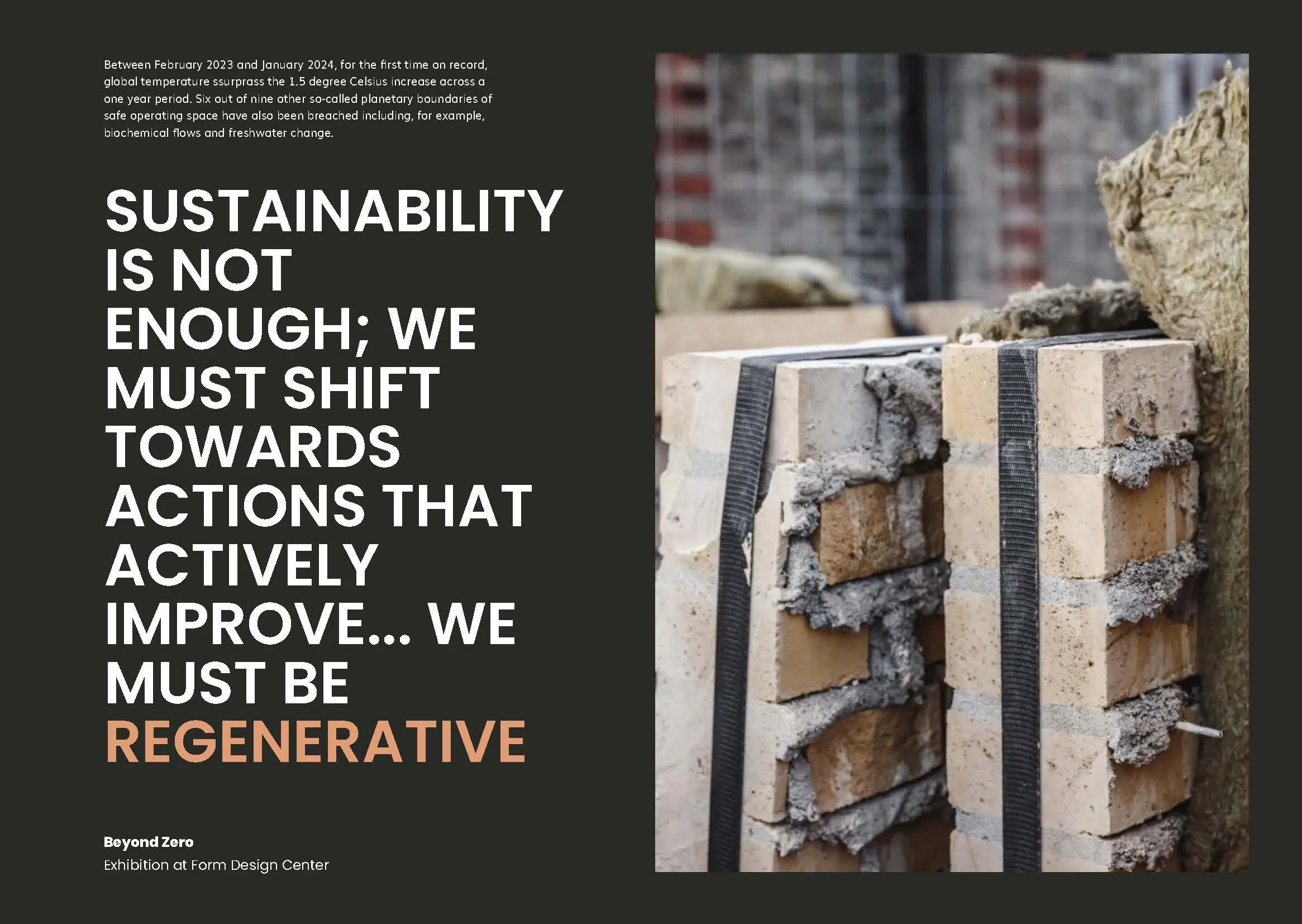
The second stage examined the consequences of those material decisions. Using metrics including occupant health (Pharos), embodied carbon, and lifecycle performance, the research evaluated recurring material selections and identified healthier, longer-lasting alternatives that could realistically be implemented within the economic constraints of affordable housing development.
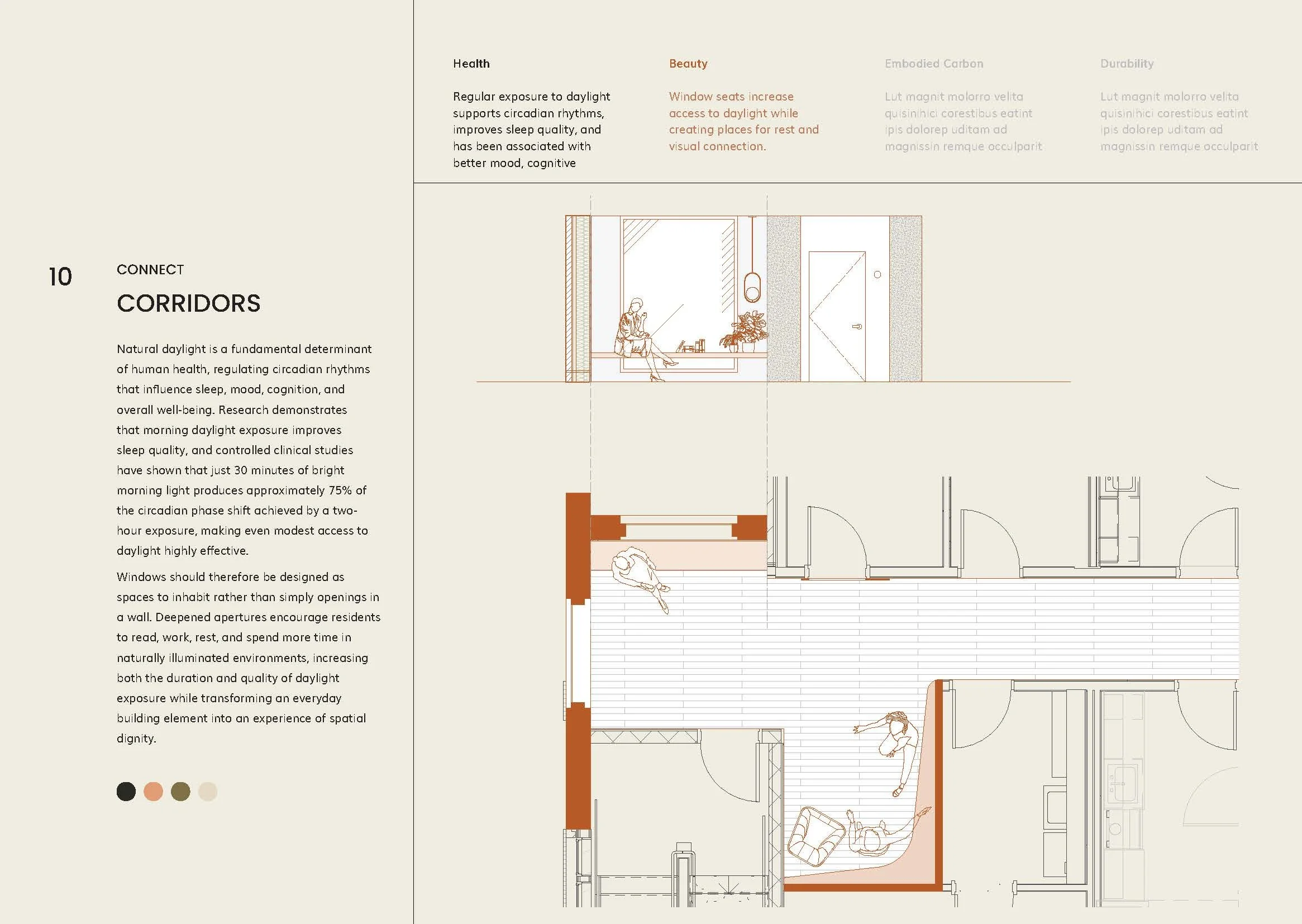
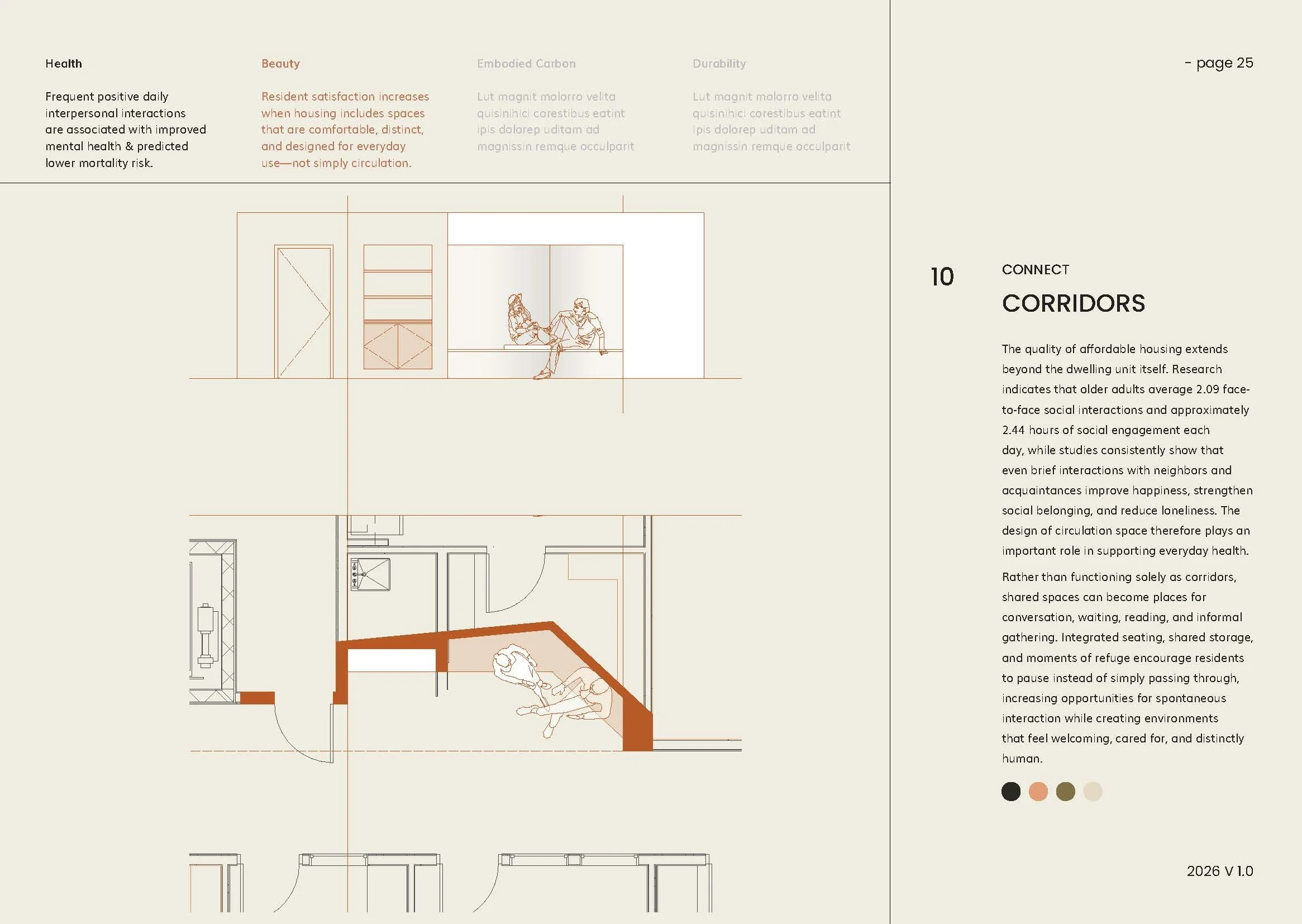
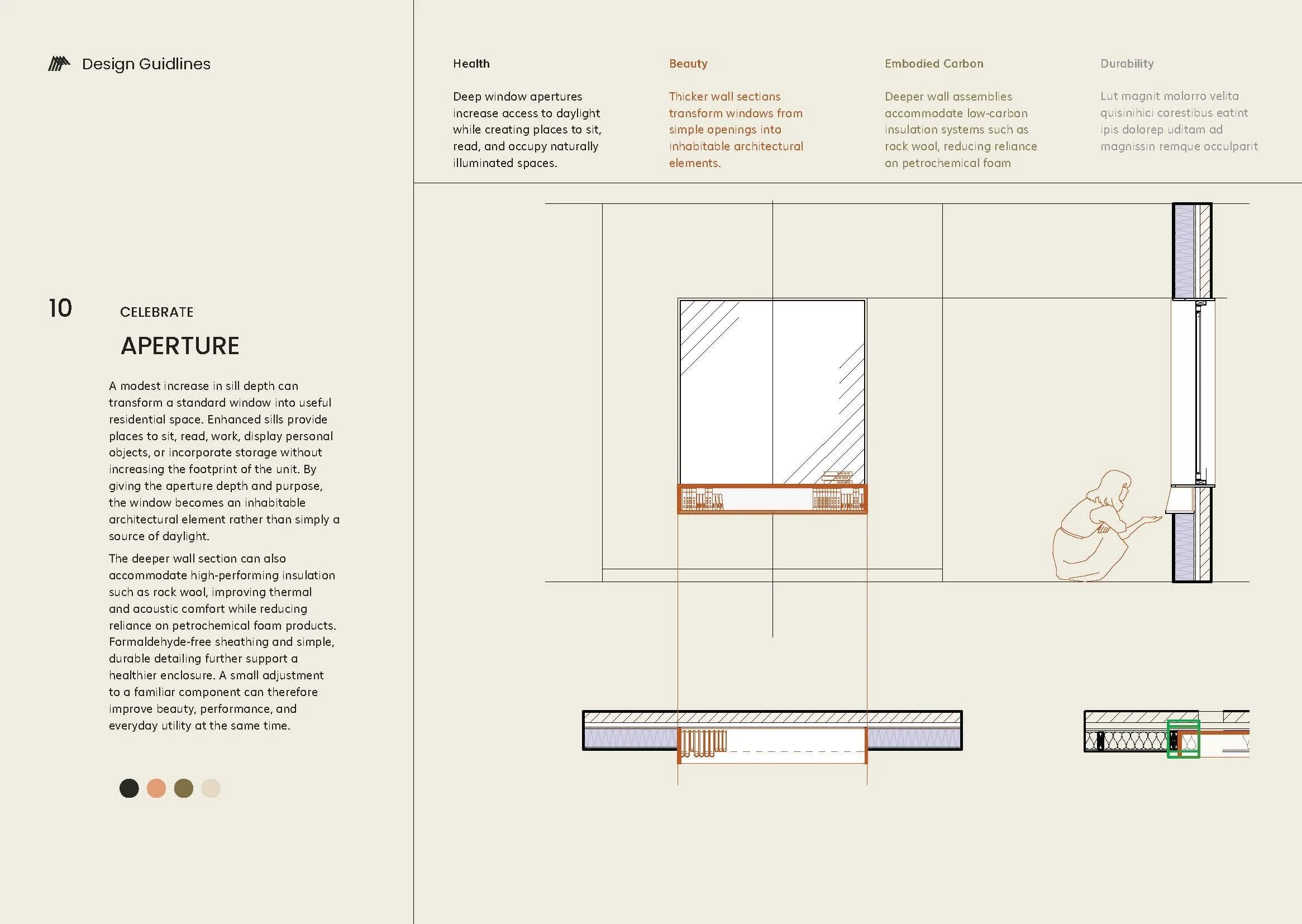
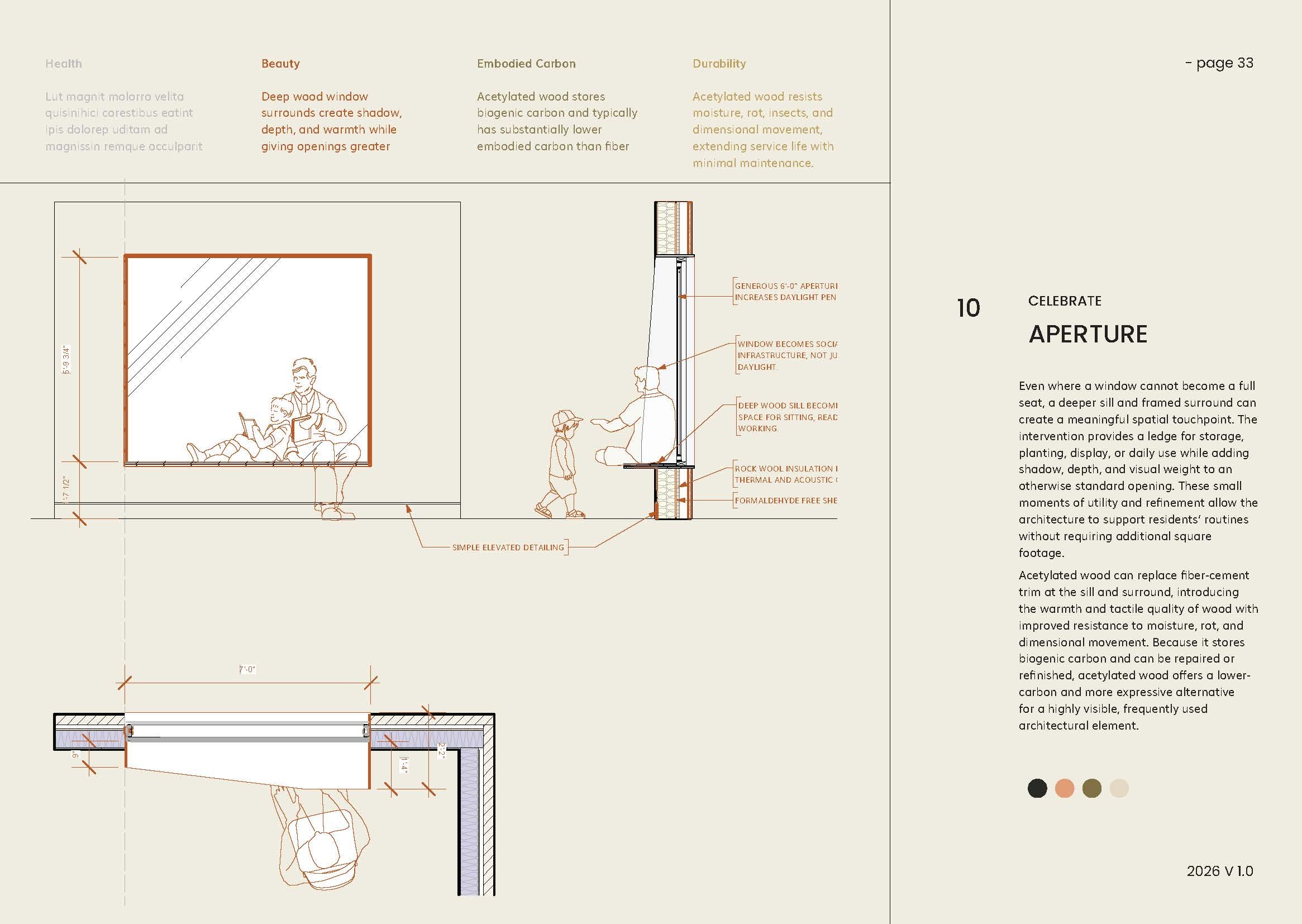
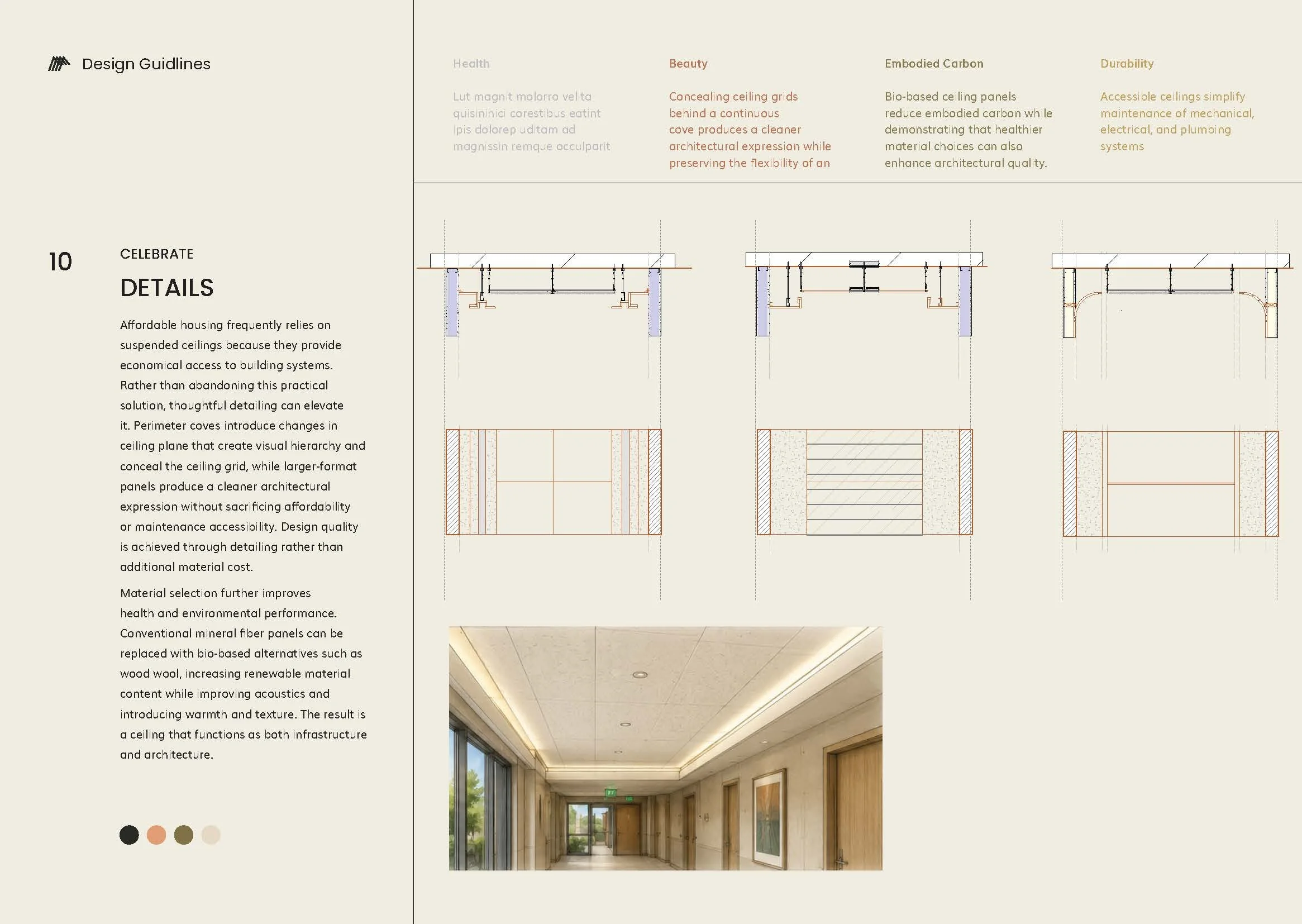
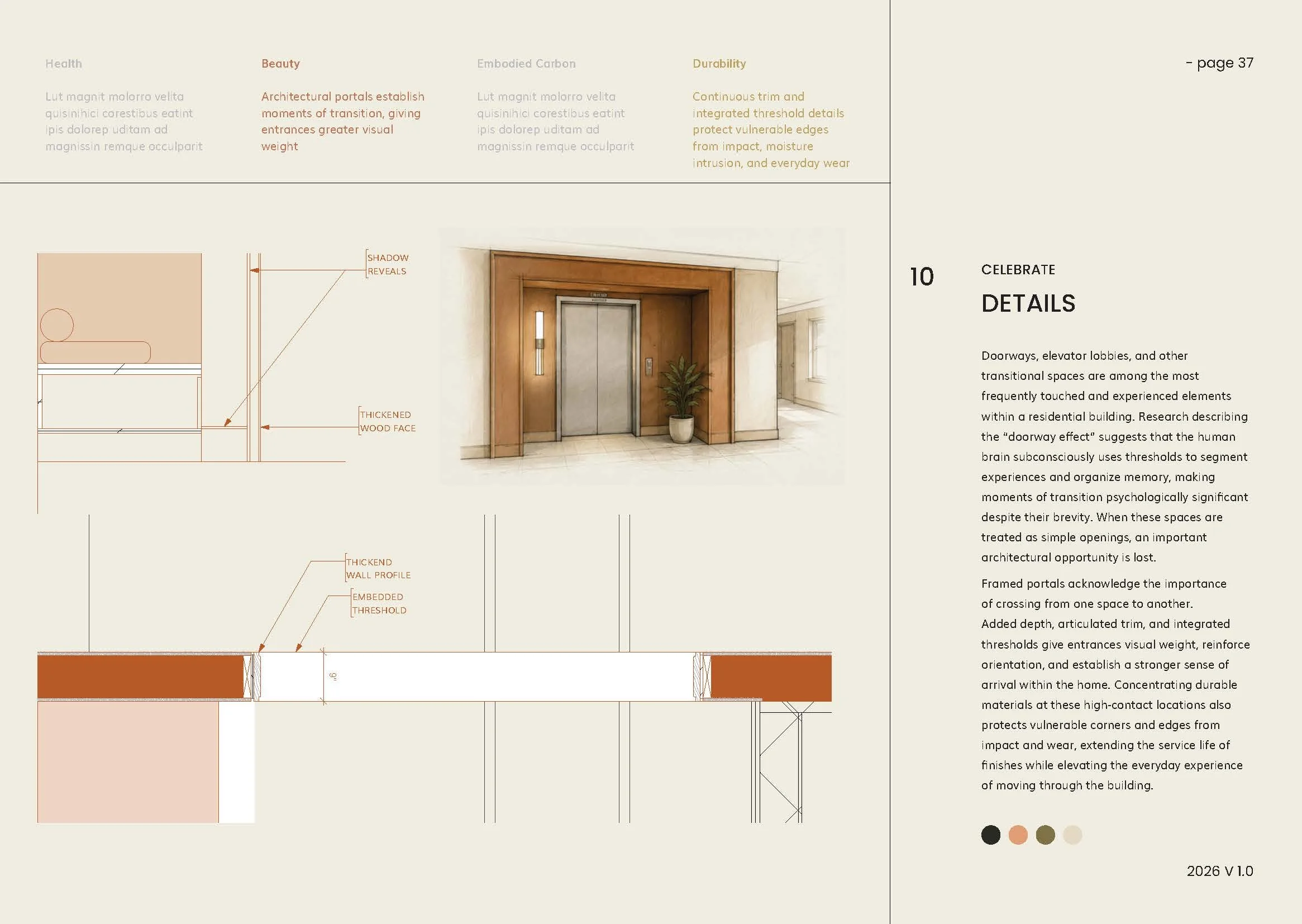
These findings informed a design framework centered on Spatial Dignity—the belief that every resident deserves spaces that are healthy, ecologically responsible, resilient, and beautiful regardless of project budget. While the first sections establish a material and environmental foundation, the final portion of the research addresses the last pillar, exploring beauty as an indispensable design strategy. Rather than proposing wholesale changes to affordable housing delivery, the work focuses on targeted, modular interventions—casework, millwork, thresholds, apertures, and small spatial modifications—that produce outsized improvements in residents' everyday experience while remaining financially attainable. By concentrating investment at high-touch moments, these interventions maximize impact while minimizing cost, making them more resistant to value engineering.
The fellowship culminated in a guidebook synthesizing these findings, which will soon be publicly available, and a public presentation at New City Arts Gallery attended by students, faculty, housing professionals, developers, and community members. You can clickthrough Taylor’s presentation, which also served as a first draft of the guidebook, above. Rather than advocating for expensive redesigns, the research argues that many of the most meaningful improvements in affordable housing come through deliberate decisions about materials, detailing, and the everyday moments that shape how residents experience home.
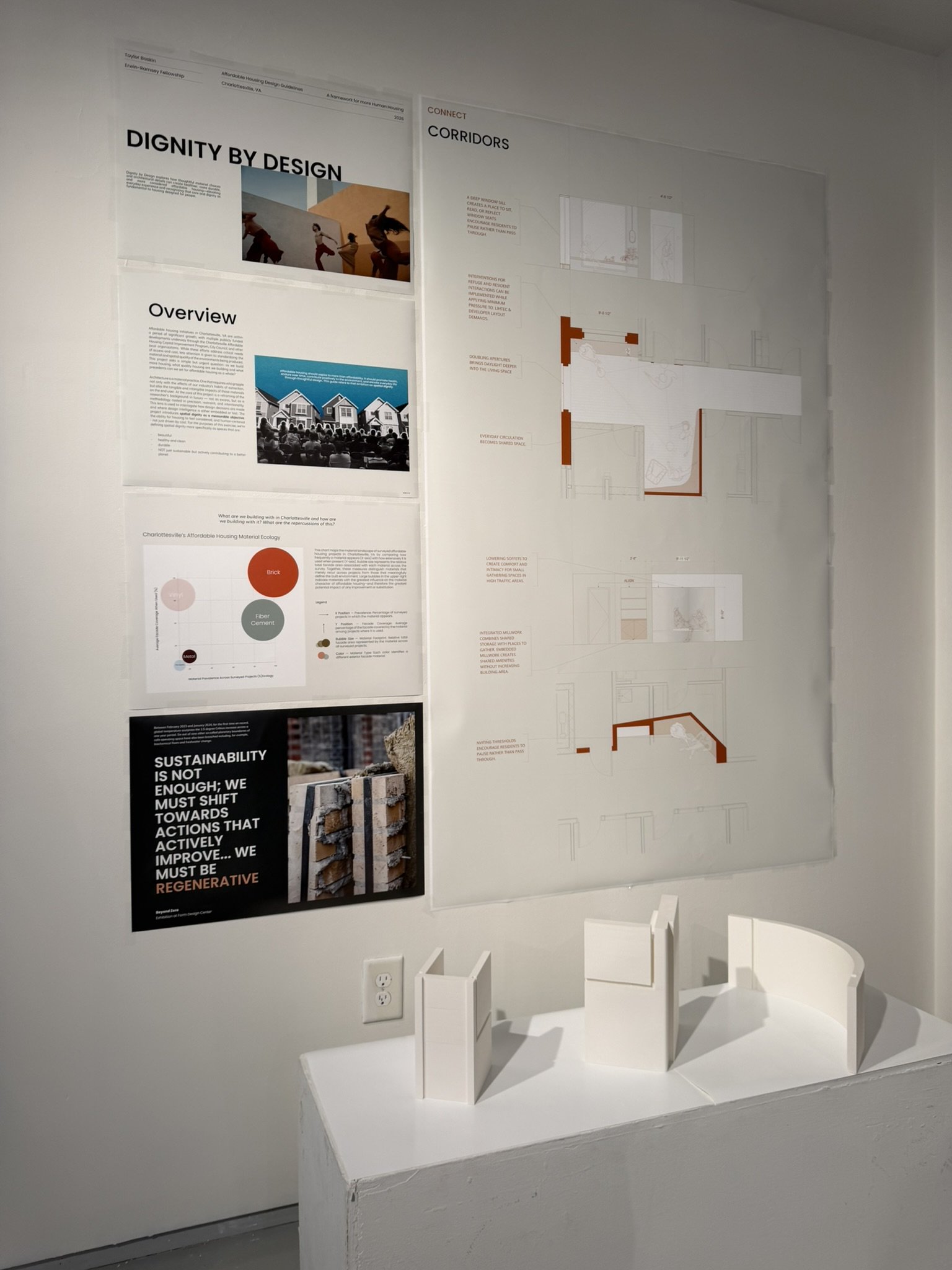
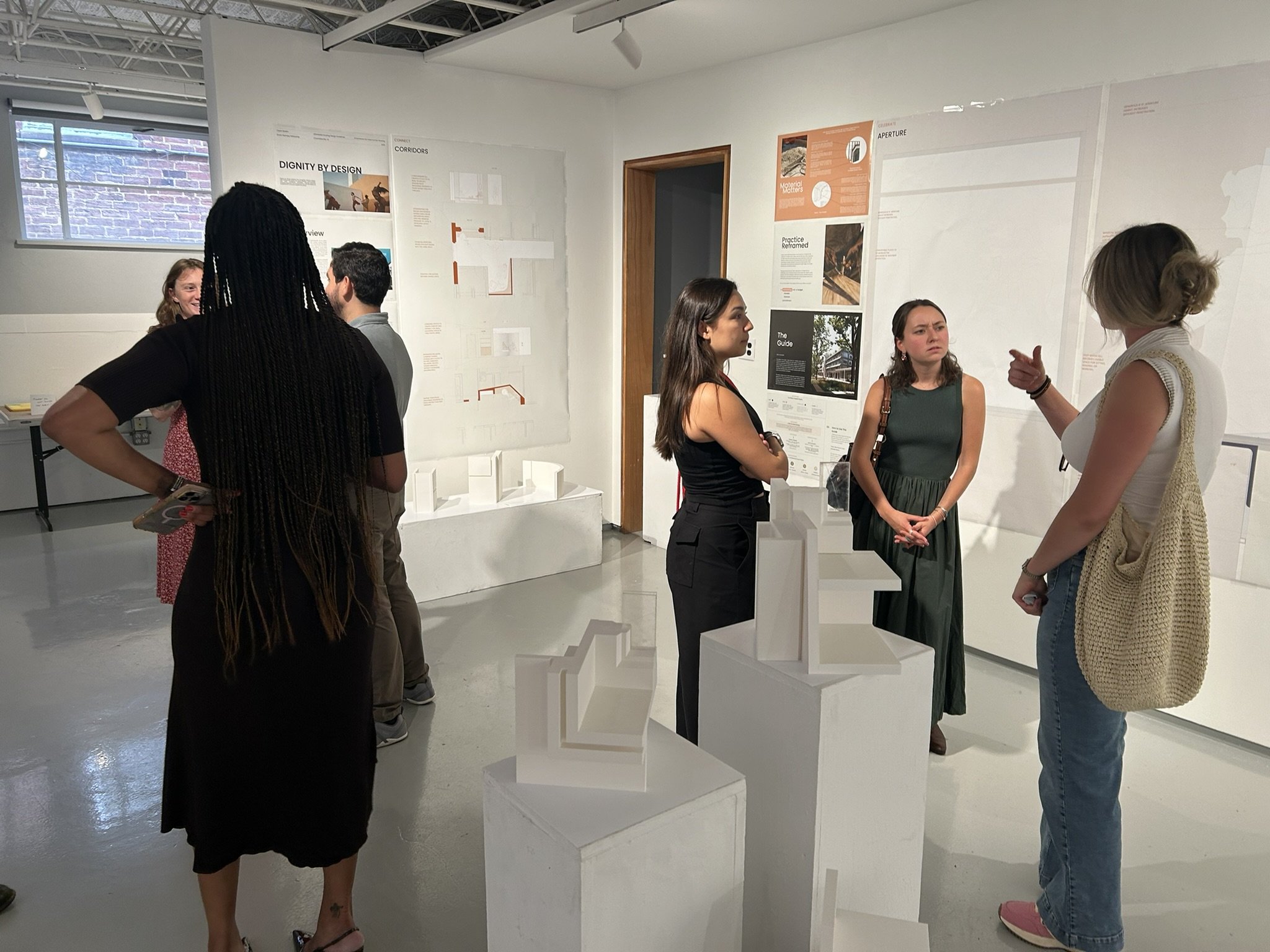
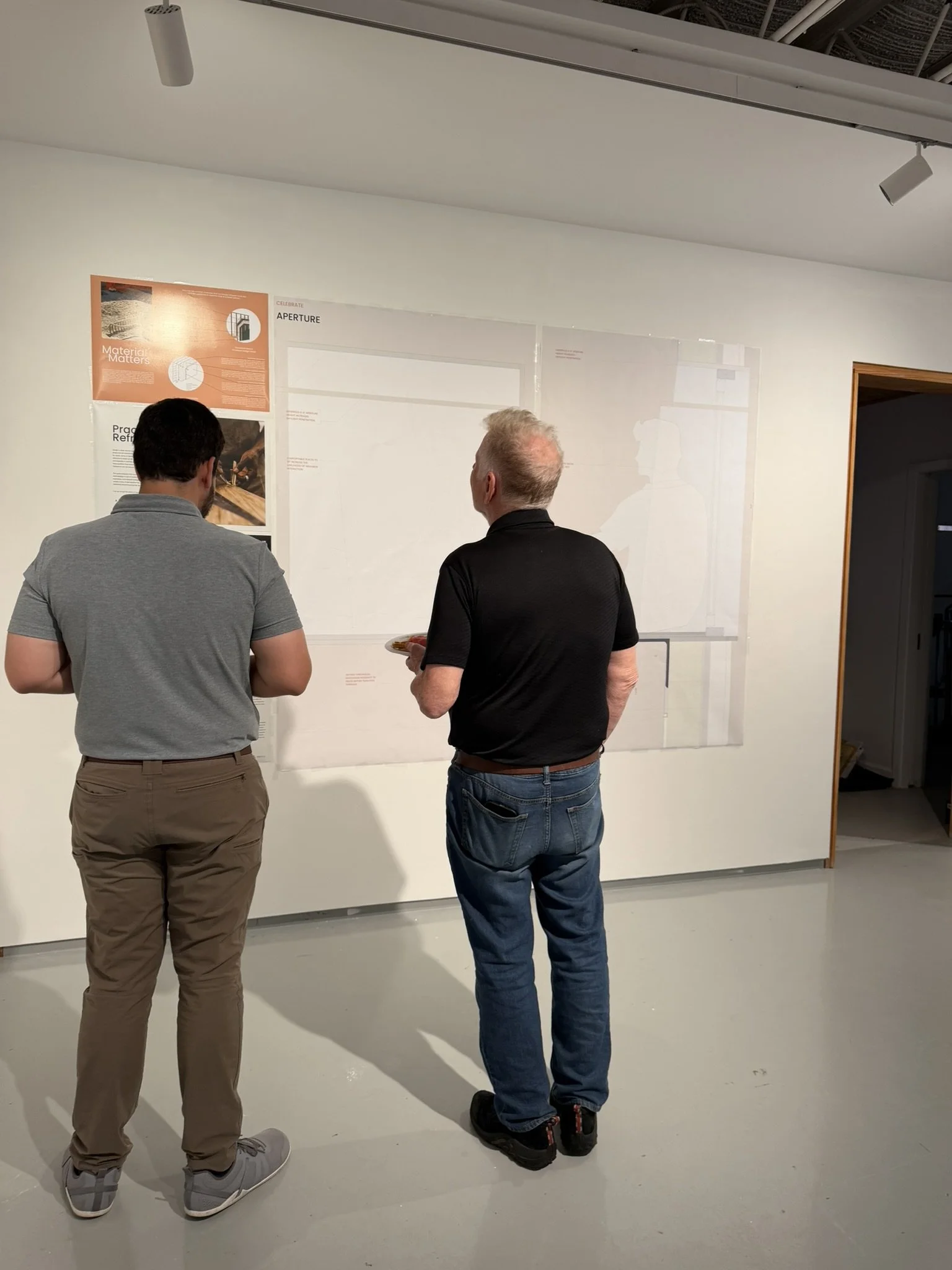
As housing affordability continues to challenge communities across Virginia and beyond, the project offers a practical framework for designers, developers, and policymakers seeking to improve residential quality without fundamentally altering project economics. By reframing luxury as a methodology rather than a market, the fellowship demonstrates how thoughtful architectural practice can contribute to healthier buildings, longer-lasting materials, and more dignified places to live.