
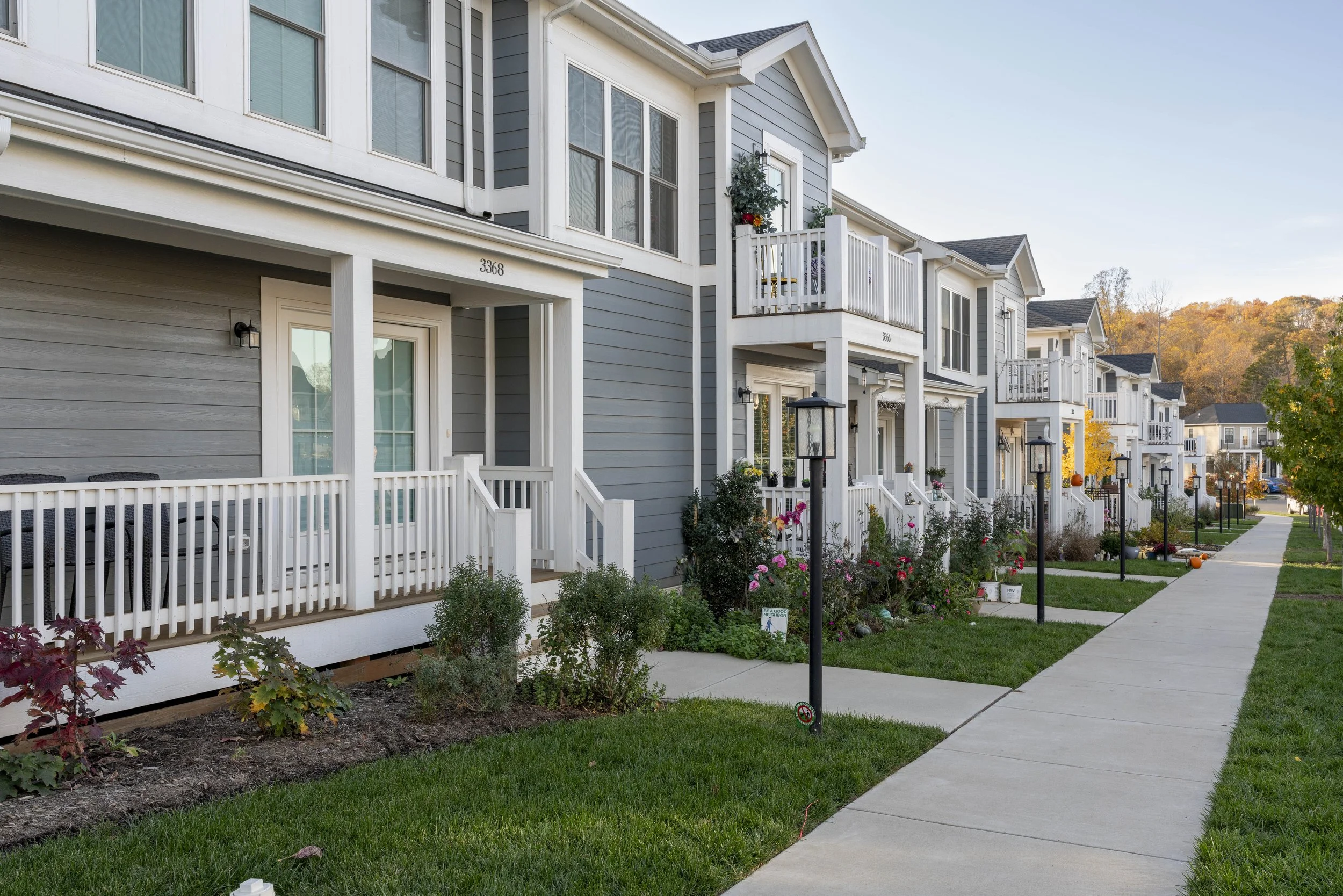
Virginia’s Faith In Housing Act:
How Churches and Houses of Worship Can Build Affordable Housing
Virginia's Faith in Housing Act (SB 388 / HB 1279) allows churches, synagogues, mosques, and other houses of worship, along with certain nonprofits, to build affordable housing on land they own without a rezoning. The law takes effect January 1, 2027.
For congregations that have considered housing on their property, the law removes one of the biggest obstacles: the time, cost, and uncertainty of asking a local government to change the zoning. This page explains who qualifies, what the law allows, and what it means for faith communities in Charlottesville and Albemarle County.
Who qualifies?
Ownership
The property must have been owned by a religious organization or 501(c)(3) nonprofit for at least five years before development plans are submitted.
Affordability
At least 60% of the homes must be affordable to households earning up to 80% of area median income (AMI) for rentals, or up to 120% of AMI for homes for sale. Affordability must be maintained for at least 30 years.
Mostly Residential
At least 70% of the project's floor area must be housing. The rest can support the organization's mission, such as worship space, childcare, or a health clinic.
Open to Everyone
The housing must be open to the general public and follow the Virginia Fair Housing Law.
Site Standards
Projects still must meet local environmental, historic, and archaeological standards, and can't be next to active industrial uses.
Utilities
The property must be within 500 feet of an area served by public water and sewer, or planned for future connections.
What does the law allow?
Density
At least 20 units per acre, or the densest existing housing within 500 feet, whichever is greater.
Height
At least 45 feet, or the height of the tallest by-right building within 500 feet.
Setbacks
No more than 10 feet, or the smallest setback of any property within 500 feet.
Parking
No more than one space per unit.
Congregations can lead the way in building dignified affordable housing.
Frequently Asked Questions
-
The law takes effect January 1, 2027, and localities must adopt ordinances to implement it. It is scheduled to expire on January 1, 2031, unless the General Assembly renews it. Affordable housing projects often take four years or more from start to finish, so congregations interested in using the law should begin planning early.
-
Read more about Charlottesville and Albemarle specifically in our newsletter post.
-
Our firm has researched the potential affects for several localities in Virginia. Please reach out for more information about your community.
-
Congregations are deeply rooted in their neighborhoods. Many already feed, clothe, and shelter their neighbors, and housing can be a natural extension of that work. Projects led by faith communities can help create walkable, lasting neighborhoods built around shared dignity and connection.
Faith-led development can also strengthen the congregation itself. It can support its long-term financial health and give it a chance to renew its commitment to its mission. Building housing is another way to care for our neighbors.
Last Updated: September 30th, 2026